Tuesday, April 23, 2019

1968 Mercury Monterey Convertible


The 1960s in America were a great time for cars. The decade would see the birth of several cars that have since gone on the become American icons. From Ford, we got the beautiful first generation of Mustangs. From Dodge, we saw the power Charger and Challenger. Chevy released the original Camaro and Corvette Stingray. But amidst all this confusion of power and stunning style was a little Ford subdivision known as Mercury.

If you recognize the name of that car company but can’t remember anything they’ve made, that’s probably for a very good reason. Mercury was a subdivision of Ford that was founded in 1938. They enjoyed quite a bit of success throughout the company’s lifetime until rapidly declining sales in the early to mid 2000s caused Ford to shut them down in January of 2011. Beginning in the mid to late 1980s, Mercury began producing the type of car that tends to populate “ugliest cars of all time” lists. Their styling became about as bland as a baking sheet.

However it wasn’t always like this. There was a time when Mercury was building cars with styling that could easily rival dodge and Chevy with cars such as the 1967 Mercury Cougar Eliminator. (Below)


However, the car in question in this article is something a little bit less loud. For the first time o on this blog, I’m going to be talking about a convertible I actually like. That’s right, it’s the 1968 Mercury Monterey. (Below)


First of all, let’s start with the unique styling on the convertible version of the 1968 Monterey. It is clear from the start that it takes many of its design elements from the original 1964 Ford Mustang. All you really have to do is take a look at the front half of the car to see the similarities. What makes the styling of the convertible version of the 1968 Mercury Monterey notable is just how different it is from the hard-top version. (Below)


The hardtop was slightly lower and hand bulging side skirts that gave it a look that could maybe even be described as slightly menacing. The front end was also a bit more squared-off and stocky, making the hardtop Monterey a bit more serious looking.

The convertible Monterey, however, was a completely different story. Arriving just in time for the summer, the convertible was everything the hardtop wasn’t. Whereas the hardtop looked like a heavy-set, serious kind of car, the convertible had a much more enjoyable look. The convertible 1968 Monterey had smaller side skirts and a slightly higher ride height. Combine that with slightly softer suspension and you get a car that is not only great to look at, but great to ride in as well.

Let’s talk specs. The 1968 Mercury Monterey convertible certainly wasn’t the fastest car on the market. It wasn’t the fastest convertible on the market either. However that didn’t stop it from being a good car. The high-end Monterey convertible could go from 0-60 mph in 7.6 seconds and had a top speed of 129 mph, not exactly setting the world on fire but not exactly slow either. Another interesting thing about this car is that the most expensive model was the only one available with all-wheel drive as standard.

In terms of notable appearances in media such as movies and TV, the 1968 Mercury Monterey only really has one well known moment. Apart from appearing in the background of many films since its debut in 1968, this Monterey convertible is known mostly its role in the music video for the Green Day song “Holiday.” The car ends the video by breaking down and rolling to a stop at the beginning of the “Boulevard Of Broken Dreams” video. The band even took the car on part of a tour with them.

Overall, the 1968 Mercury Monterey convertible is a beautiful car that is often overlooked. I love almost everything about the car. It looks fantastic and the V8 engine used in the more expensive models sounds fantastic. I really can’t find a reason to dislike the 1968 Mercury Monterey convertible.

BELOW IS A PHOTO OF THE MODIFIED  1968 MERCURY MONTEREY CONVERTIBLE USED IN THE "HOLIDAY" MUSIC VIDEO


Thursday, April 18, 2019

2019 Ferrari P80/c

Ferrari. I’ve talked about them on this blog before. Throughout automotive history, Ferrari has been known for making rare, beautiful and fast cars. When I think of classic cars that I would want to own one day, the 250 California is almost always at the top of my list. However, no company is without its ups and downs and Ferrari’s recent history hasn't exactly been spotless.

Since the turn of the century, Ferrari has shifted its focus from a balance of beauty and speed to simply wanting to go fast. Cars like the 2002 Ferrari Maranello (shown below in silver) emphasize this as it is by far the ugliest car to ever break the 200 mph mark.
This isn't to say that Ferrari hasn’t produced some amazing cars since the year 2000. The 360 Challenge Stradale (top) and 488 GTB (bottom) are certainly proof of this, but they haven't been consistent.

However, those days may be behind us with Ferrari’s latest high-speed offering.

First, a bit of background information. Towards the end of 2018, last year, Ferrari hired a new and specialized design team to focus solely on creating their special releases. So far this team has done a very good job, creating such cars as the Monza SP1. (shown below)
And now they have revealed their newest 4-wheeled wonder, the Ferrari P80/c.


First of all, let me just say that this car is gorgeous. It is, without a doubt, the greatest looking car set to release this year. Many other supercars set for release in 2019 are simply remaking their old styles, but Ferrari is doing something new. Anyway, now I've gotten that out of the way, let’s talk about the car itself.

If you know Ferrari, you'll probably realize that the car isn't exactly new. It's actually a 2019 Ferrari 488 GT3 Race Car with some serious modifications. The second thing you need to know about this is that you probably won’t ever get a chance to see the car in real life. That is due to the fact that there will only be 1 unit produced as it is a custom vehicle. Also, even if you do manage to get behind the wheel of a P80/c, you won't be able to drive it on the road. That's right, the P80/c is a track only specialized vehicle.

Now let’s take a look at the car itself. First of all, unlike the other main Ferrari track car, The FXX-K, the P80/c won’t be a hybrid. Instead, the car will draw all its power from its 3.9 liter naturally-aspirated V8 that will produce approximately 735bhp. The P80/c uses this power to its advantage as it goes from 0-60mph in a tarmac melting 2.7 seconds. Couple that with the explosive 211 top speed and you get one insanely quick track car. The car also features a reworked version of the due-clutch gearbox found in the 488 GT3. The P80/c’s gearbox is the highest tech paddle-shifter  Ferrari has ever created, built to handle the quick shifts with the raw power of the V8 engine. The car also used the same rear-wheel-drive system found in the 488 lineups.

Moving on to the exterior, it's pretty obvious that this was a go big or go home build. Almost every single panel is new. There is a massive rear wing that gives the car enough downforce to easily keep it on the track, even at full speed. Every panel has a purpose, nothing is just for show. The massive dips in the car’s hood, along with the grooves down its side allow for increased airflow, decreasing the car’s drag. Both the body of the car and its massive rear wing are made of solid carbon-fiber, saving quite a bit of weight, allowing for better cornering, faster acceleration, and higher top speed. And of course, it wouldn't be a racing Ferrari without the blazing red paint job.

Continuing to the inside of the car, we get a look at many new features as well as some old ones making a return. The layout is designed to feel more like the cockpit of a small fighter plane than a
track car, which, at high speeds, only adds to the very real sensation of actual flight.


Many of the instruments and paneling are either entirely, or mostly, made of carbon-fiber to save as much weight as possible. The cockpit also includes brand new bucket racing seats for both the driver and passenger. A screen in the center if the console, directly behind the wheel, gives the readouts and details on every possible piece of the car while also acting as a general control center for the vehicle. Everything, apart from the essentials, has been stripped away to save weight. This is another reason why you can’t drive this car on the road.

All in all, I love this car. Everything about it is what I think a Ferrari should be. It is blazingly fast without compromising on the beauty of the design. This is the best Ferrari the world has seen in several years and I seriously hope we get to see more amazing designs like this in the future.


Thursday, April 11, 2019

Ford F100 (Second Generation)

Let me say this, trucks aren't really my thing. I understand that they have a purpose on the road, they haul heavy loads from point A to point B and can go almost anywhere off road, but they have never really appealed to me–except for this one.
 The second generation of the iconic Ford F-Series truck ran from 1953 to 1956 and created the blend of style and durability that Ford would become known for. When I think of a classic truck qor even a classic Ford for that matter, this image is what pops into my head. With that being said, let's get into the truck itself.

Ford's F-Series of trucks began in 1948 with the first generation of the, now iconic, Ford F-100. While this generation was the semi-powerful workhorse  Ford wanted it to be, something still didn't feel right – it was the styling. Back in the 1950s, Ford was known for creating sleek and beautiful vehicles, see the 1953 Customline (top) and 1952 Tudor (bottom) as examples.


And while the first generation F-100 was without a doubt a good looking truck, with it's flared wheel arches and vented hood, it fits more in line with what we today might class as being a hot-rod. Ford wanted none of that so they raised the ride height slightly, gave it a longer back end and removed the hood vent. However, they kept the oversized wheel arches so the truck wouldn't get too boring.

In the second half of 1954, a revised model of the second generation  F100 was released, this time featuring the all new 239 Y-Block V8 engine replacing the earlier 239 Flathead V8. The new engine set up gave the truck 130bhp. However the most powerful variant of the truck came in the final year of the second generation F100. In 1956, for a small racing competition, a mechanic at Ford decided to take the 363 Lincoln Y-Block V8 and try it out in the F100. A small side note, the 363 Lincoln Y-Block V8 was Ford’s first OHV, overhead valve, V8 engine. Anyway, this gave the truck a whopping 300 horsepower. This final version of the second generation F100 was given a large V8 badge on its hood to show its powerful place in the F100 lineup. Original versions of this model are quite rare nowadays. If you see one using the Lincoln engine setup, you have most likely encountered a modified truck. However, the 300bhp F100 still lives on in the digital world as it is the version that appears in the Forza Horizon racing game series

Overall, I really do love this truck. Everything from the raw sound of a 1950s Ford V8 to the unique styling make this one of the most desired classic trucks on the market. If you really want to own one yourself, you can probably find a working one in pretty good condition for around six thousand dollars. However, if you want one that drives well and still has its original parts, or close to it at least, you’ll have to look a little bit harder. This, sadly, is due to a couple of factors. The first one is that being built over 60 years ago,  wear and tear will have taken its toll on the vehicle. Not to mention the fact that original or proper replacement parts are becoming harder to find and, as such, more expensive.

The second reason an original build in good condition is so hard to find is due to this truck’s well-known reputation as both a hot rod car and drag race car. For quite some time now, people have been lowering the suspensions on these trucks, redesigning the interior, painting it in bright colors and dropping a 550bhp Nailhead V8 into it. While most of these builds end up looking and sounding cool, it just makes an original that much harder to find.


Thursday, January 31, 2019

Ferrari FF/Lusso/Lusso T

Ferrari. I don’t care if you like cars or not, I can almost guarantee you've at least heard that name at some point in your life. However, if you are the type of person who has been living in caves their who life and has just discovered fire, allow me to briefly fill you in on what you have missed.

Ferrari is an automotive company founded in 1939 in Italy by a man named Enzo Ferrari. If the name Enzo Ferrari sounds familiar in recent years, it is probably because Ferrari made a car named after him in 2002. Anyway, starting with the sleek Ferrari 125 S in 1947, Ferrari quickly became known for beautiful car designs and very fast top speeds. The road cars were sleek masterpieces of Italian craftsmanship, and the race cars won basically every raced they entered… until a little car called the Ford GT-40 MKII absolutely destroyed them at Lemans in 1966, but that is a story for another day. So Ferrari began a rise in popularity, a rise that, despite a few rough patches, has never really slowed down.

That isn't to say that Ferrari hasn’t made bad cars though. Some, such as the bland and disgusting 2002 Ferrari Maranello, can be marked as products of their time because, as any car lover worth anything will quickly inform you, almost no cars looked good in the late 1990s and early 2000s. But Ferrari, once again, began to rise in popularity, to the point where the company was voted most powerful brand by Brand Finance, in June of 2018. During this time it seemed like Ferrari could do no wrong, turning out masterpiece after masterpiece. However, for every beautiful car like the 458 Italia (shown on top) we had to get abominations like the 2011 Ferrari FF (shown on bottom)

2012 Ferrari 458 Italia

2016 Ferrari FF

In 2011, someone on Ferrari’s design team probably went home, picked up his shoe and said “I’m drunk.” and apparently the rest of the design team were all drunk as well because, later that year, we got this horrific disaster on wheels.

Not only did the FF look like a deformed shoe, but it handled about as well. The awkward rear-wheel drive system was never perfectly balanced, making the ride as bumpy as a wooden roller coaster. Although an all-wheel drivetrain was eventually made available, this didn’t stop the vehicle from fishtailing around, even in perfect weather conditions. The fuel economy wasn't horrible, averaging 18.3 mpg, but since when does anyone buy a Ferrari for good gas mileage.  The car did boast a fast top speed of 208.5 mph, presumably so that people behind it wouldn’t have to look at its oversized ass for that long. All this added up to a price tag of $295,000 during its six-year run that finally ended in 2016.

The world had several months of celebrations, until a chilling announcement at the 2016 Geneva Motor Show. Word had leaked that Ferrari would be announcing a new car. People all around the world were excited to find out what beautiful Italian car would soon be put into production. But then Ferrari announced that it would be the successor to the FF and hopes took a sharp drop. expected something that was even worse than the FF. Instead, Ferrari unveiled the GTC4 Lusso Concept, a beautiful and sleek wagon-style Ferrari that was enjoyed by almost everyone who saw it. However, there was one keyword that nobody seemed to notice until it was too late–”Concept.”

In the four months between the unveiling and it’s first sale, probably to someone as vision impaired as Mr. Magoo, Ferrari changed everything that people liked about the car. They brought back the lumpy rear end from the FF. The gas mileage dropped down to 13.4mpg. And the interior was scaled back as well. While the material on the inside of the vehicle was definitely beautiful and added a sense of luxury to the car, there were certain drawbacks. The basic model of the car only came with a single phone charging port, and the car was known to short-out any plug-splitter attachments. But don’t worry, Ferrari was willing to install up to four more charging ports in the car–but only if you wanted to pay $150 for each one.

Speaking of money, you might be wondering how much one of these cars actually costs. Well first off, if you are actually considering purchasing one of these cars you might just want to check yourself into the closest mental institution first. But, as this is a proper car review, I wouldn’t be doing my job if I didn’t tell you the price. So, you can purchase a Ferrari Lusso for around $310,000. Or you can buy the slightly nicer Lusso T for $350,000. But there is also a third, much more expensive, option. If you are someone with cash to burn, go over to Ferrari’s website and customize your own Lusso or Lusso T. The custom car creator on the official Ferrari website lets you customize almost every single detail of the vehicle. When you are done, your bill should be around $1.2 million dollars. And to put into perspective how much of a waste of money this is, if you are looking for luxury cars, you can buy a 2014 Rolls-Royce Phantom for just $167,000. Now if you’ll excuse me, I have to look at pictures of a Honda Civic hatchback to remind myself what a good hatchback actually looks like.

2019 Ferrari Lusso T

2019 Honda Civic Type R Hatchback


Tuesday, January 29, 2019

2019 Hennessy Heritage Ford Musstang

The Ford Mustang. Arguably America's most iconic, beloved, and well-known muscle car. If you asked someone in another country what the most iconic American car ever made was, they would probably respond with "The Mustang of course!" Or something to that effect. But that raises questions. Why is it the most well-known muscle car? It certainly isn't the base speed. When it comes to speed, the 2019 Mustang GT  tops out at around 175 mph. This is the slowest of any top model muscle cars from the big three brands, Ford, Dodge, or Chevy. Chevy's new Camaro LE can reach speeds of up to 194mph and the latest version of Dodge's Challenger Hellcat, the Red Eye, can break the 200 mark with a blazing top speed of 203mph. It isn't the 0-60 time either. The 2019 Mustang GT posts a highly respectable 0-60 time, coming in at four seconds flat. But that is once again smashed by both Chevy and Dodge, with the 2019 Camaro LE boasting a 0-60 time of 3.7 seconds and Dodge blowing everyone else away with a 3.3 second mark.

Now you could easily argue that it all comes down to how the car actually looks. In my opinion, a muscle car has to look sleek while still looking menacing and powerful. Dodge certainly has the menacing and powerful part down but is about as sleek as a brick covered in razor blades. Chevy on the other hand... I don't really even want to get into the absolute mess that is the Camaro’s design.

But when you look past all of these specs and statistics, you find what makes the Ford Mustang such a truly special car. That’s right, I’m talking about the numerous companies, both large and small, that have made customized versions of the car over the years. Shelby, Roche, and Saleen, to name just a few of the heavy hitters. And there is Hennessy. Hennessy, a name synonymous with speed and style. If you have been living inside a camper van at the bottom of a lake for the last twenty-eight years, allow me to fill you in.

Hennessey Performance Engineering is a car building and tuning company based in Texas. They are known for taking already powerful vehicles and turning them into rockets on wheels. Some of their most notable cars include the 1,244bhp monster known as the Hennessey Venom GT, the VelociRaptor Truck, the Hennessey Venom V5, and of course, the Hennessy Heritage Ford Mustang GT. Point being, they are some of the best tuners on the planet for making fast cars go even faster.
Now, let’s get to what you have all been waiting for, the 2019 Hennessy Heritage Ford Mustang GT.

First of all, if you have any dreams of obtaining this glorious tarmac-melting machine, you’ll need to be ready to pay anywhere between $90,000 to $100,000. Now I will wait while you wipe that “Ooooh shit! A $100,000 Mustang?” look off your face. Surprise over? Good, let’s move on.

Let’s talk about the Mustang’s fuel consumption. There isn’t an easy way to say this. It’s a thirsty car. Average highway mpg is a whopping 6 miles per gallon. Hey, what did you expect from an over-the-top muscle car? If you wanted fuel efficiency you would have joined the people of San Francisco and bought a Prius now, wouldn’t you? Anyway, now I’ve gotten rid of the Ecoboost Mustang loving morons, we can get to the real fun.

Every car lover loves a great big engine, and this car certainly has one, a tuned up 5.0 liter Coyote V8 to be exact, with a 3.0-liter supercharger thrown in for good measure. All this produces a jaw-dropping 808 horsepower and 677 pound-feet of torque, still nowhere near the amount produced by Hennessy’s other muscle car, the Camaro Exorcist, but it doesn’t need to be. That is because, in the Camaro Exorcist, all Hennessy did was tune up the already powerful engine. The Mustang however, got the full Hennessy treatment.

They added an option for an All-Wheel-Drive setup instead of the standard two-wheel drivetrain. This allows the powerful beast of a car to actually corner, something Mustangs are notoriously bad at.

Hennessey also details, both in and outside the car, to help its performance. A specialized air-to-water intercooler and big injectors were added to help out the V8. All these modifications allow the car to put out more overall power than Dodge’s top off the line Hellcat, the Challenger Redeye. For ease of access to all forms of Mustang lovers, two different gearbox setups are available, either a six-speed manual gearbox or a 10-speed automatic, no paddle-shifters in sight. The 2019 version is also the quickest road-legal Mustang ever made, hitting the magic number of 60 miles per hour in just 3.2 seconds.

Unlike what Hennessy did with the Camaro Exorcist, the Heritage Mustang has new brakes that are meant to handle the explosive power of the Coyote V8. The new braking systems in the Mustang, just like all of Hennessey’s parts, were built entirely in-house. This is because having the same people who built the thing that makes the car go also make the thing that makes the car stop leaves a much smaller risk of error.  Special tires have also been made for the car, making sure it can maintain good grip at high speeds.

Speaking of high speeds, I haven't even mentioned how fast this beast really is. That’s because, as of right now, it is the fastest muscle car on the planet. Just as a little reference point, both of Dodge’s fastest vehicles, the Challenger Hellcat Redeye and the Demon, top out somewhere between 203 and 205mph. Now, those are fast cars, but the 2019 Hennessey Mustang leaves them in the dust by topping out around 220mph. That is faster than most Lamborghinis and Ferraris.

Earlier on I mentioned that this Mustang is priced at around $100,000. That’s a surprisingly low amount of cash for a car that is this fast. But there is a catch, and it comes in the form of the number being made. Hennessey has never made more than 60 units of any of there vehicles. So it should come as no surprise to anybody that, on Hennessey’s official web page they have announced that only 19 units of the 2019 Mustang will ever be made.

With that being said however, this isn’t just another fast car. Unlike what they did
with the Camaro Exorcist, Hennessey has completely reworked the car’s body as well. The generation six Ford Mustang has always been criticized for looking safe and boring, so the people over at Hennessey decided to change that.

The result is one of the greatest looking modern Mustangs ever created
. They kept many of the normal Mustang’s smooth curves but added flared wheel arches to make the car a few inches wider. They increased the ride height in the rear end of the car, giving it the look of a powerful animal, poised to strike. Hennessey also saw the chance to add a small spoiler to the back of the car, along with a new defuser to match. And then of course, you have the retro style paint job. The 1980’s racing paint job shown above is the only one you can get as standard when you buy the vehicle. Sure, you could always respray it later, but why would you? The paint job is a call back to the racing heritage of the ford mustang, an attempt to capture the years of racing history in just a single paint job, and they did it perfectly. All these design choices combine to give the car the aggressive but refined look it was once known for.

So keep your Challengers and Demons, your Corvettes and Camaros, because the king of all muscle cars is back, and ready to kick some serious muscle car ass.

Tuesday, October 9, 2018

Car Protective Services

We all know stories of Child Protective Services taking away children... but why not a similar service for the car. This is what I propose.


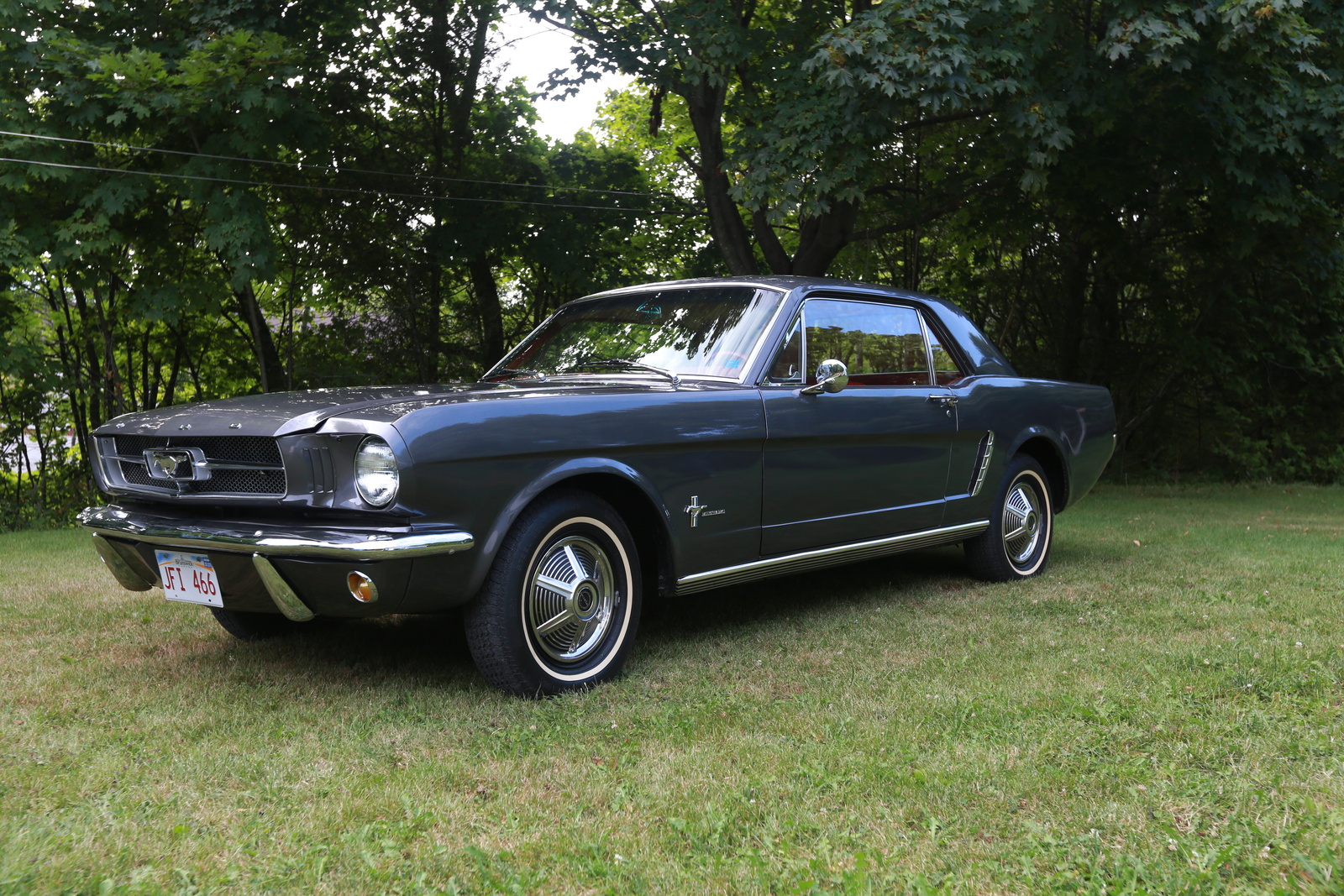
If you like cars, chances are you come across websites like barnfinds.com. These websites specialize in old abandoned cars, normally muscle cars or classics, that have been left to rot in sheds and barns. Whilst watching the step by step restoration of these timeless classics is fascinating, I always get extremely enraged whenever I see something like an old 1964 Ford Mustang just sitting in someone's yard as a heap of rusted scrap because they couldn't be bothered with the upkeep of such a magnificent vehicle. So I have come up with a plan. Whenever someone purchases either a car with a quite a bit of value of $200,000 or more, or a car that has potential to hold a large value, they will have to sign a Car Protective Services plan. This means that once every two or three years, the vehicle owner will get a visit from a brand representative to check up on the vehicle. As long as the vehicle isn't in terrible condition or completely abandoned, everything will be fine. But if a brand representative finds that the car has been neglected, such as the Ferrari F50 seen below, the owner will be fined a hefty price for "neglect of classics."

This particular F50 had animals living in it and was rusting away. Of course, the amount of money on the fine would be tied to the value of the car. As of right now, a good condition F50 costs around 1.6 to 2 million dollars. A reasonable fine for a car of this value would be anywhere from $100,000 to $350,000. a system like this, with such measures, would be harsh, but fair. Certain things such as disability of the owner and whether or not the car had been gifted or inherited since the last inspection, would be taken into account. As I have previously said, it would be harsh, but if you can afford to buy the car in the first place, you should be able to afford the upkeep. This system will allow cars that are considered "amazing" or "classic" today to continue to be just that and would result in a lot less of this...


And a lot more of this...


Friday, September 28, 2018

The Ford Ass Fire (1994-1996 Ford Aspire)


The mid to late 1990's were not a pretty time for Ford, or the rest of the automotive world. Almost everything on the roads looked a failed Wacky Races extra but boring. But, as with any mess, there are a few cars that rise above the rest. These are the cars that are the worst of the bog of pure shit from that time period. One of those cars is the 1996 Ford Aspire, or more accurately, the Ford "Ass Fire." It is one of the most critically flawed vehicles on   this blog . I would say "buckle up" or "strap in" at this point, but honestly, I wouldn't even recommend getting in the damn thing to start with.  Anyway, brace yourselves for the utter embarrassment to the automotive world that is the 1996 Ford Aspire.

Let's start with how much the average person, or even car enthusiast knows about this car. Well, the world doesn't seem to, or at least doesn't want to, know about the car. What I am About to show you ois the entire Wikipedia article on the vehicle. Okay, here it goes. "The Ford Aspire nameplate has been used by the American automobile manufacturer Ford for the following cars, in the following markets: 
  • Ford Festiva, in North America from 1993 to 1997
  • Ford Figo, a rebadged third generation Ford Ka, in India since 2015"

There you go. That is all that Wikipedia has on the vehicle. As the article, if you can call it that, so kindly points out, the name was also used on the Ford Festiva in North America. However, towards the end of that tenure, Ford made the shitbox into it's  own vehicle. The vehicle was based largely off the ungainly Ford Festiva Sx, the 1996 Aspire picked up from where that failure had left off. It sported many of the same panelings and an almost identical shape. However, where as the Ford Festiva SX was laughably stupid and killed off quite quickly, this butt-ugly son of a bitch refused to die and became an unfortunate scar on the company's, at that time already failing, reputation. Another thing that is difficult to tell is what warped mind was responsible for the pure disaster that was the design of the vehicle. This was largely due to the fact that the Aspire wasn't even originally buit by Ford at all, it was built by Kia for the Korean market. Did the motoring world care? Fuck no! They just new the damn this was toxic as hell and knew to stay the hell away from one. There were Evan several joke calls to local authorities with one basic complaint... "someone has put a horrible statue where my parking space is supposed to be."

Anyway, now let's talk stats. An important thing to note here is that the car was available in both automatic drive and manual. Let's start by talking feul consumption. Keep in mind that, by this point, the 1995 first generation Toyota Prius Hybrid was already in place. With that out of the way, here are the numbers.
 Automatic (City): 8.0 mpg
Automatic (Highway): 6.3 mpg
Manual (city): 6.9 mpg
Manual (highway): 5.2 mpg

Those numbers are some of the worst-in-class for this class of vehicle.  And while we are on the subject of worst-in-class things, the 3-Dr only had one engine... a tiny little shit-can of an 8-valve 1.3L L4 SOHC. That's right, the tragic little Honda engine went in a Ford made by Kia. And the cheap low grade part's didn't stop there as the car boasted a sluggish and sticky 3-speed automatic gearbox that made the gearbox in the Mustang II look like the work of gods. Many gearbox failures were reported in the 1996  version of the car, as well as many reports of the gear stick either getting stuck, normally whilst on the highway, or snapping clean off. Then we come to the car's top speed. Well, there isn't really much of one as this hunk of junk could only reach 180KMPH (111 mph). A slightly better version was made available to make up for this. This version added 2 more horsepower and a 5-speed gearbox.
Everything about this car is tragic, enough said.